


A great haircut can make the rest of your week feel easier. A bad one can make you count the days until it grows out. In a city as large and varied as Toronto, finding the right barber is less about picking the closest shop and more about finding someone who understands your hair, your style, and your comfort level.
Toronto has barbershops in every kind of setting, from polished studios downtown to neighbourhood shops in Scarborough, North York, Etobicoke, East York, and the west end. That choice is a good thing, but it can also feel overwhelming if you are new to the city, changing styles, or trying to fix a cut that did not work out.
The good news is that you do not need to guess. With a bit of research, a few smart questions, and a visit or two, you can choose a barber with real confidence.

Start with local research before you book
Online research is usually the easiest first step. Toronto is spread out, and a barbershop that looks perfect online may not be practical if it takes 45 minutes to reach after work. Start by narrowing the search to areas you already visit.
Good places to check include:
Google Maps listings
Barbershop websites
Booking platforms
Instagram portfolios
Community groups or neighbourhood forums
Reviews on local directories
Look beyond the star rating. A shop with a strong average rating is a good sign, but the written reviews tell you more. Read what people say about timing, communication, cleanliness, and consistency. A review that says “great fade” is helpful. A review that says “the barber asked questions, explained the cut, and checked in before taking more length off” is even better.
Pay attention to patterns. One negative review does not automatically mean a shop is bad. Every business gets the occasional unhappy customer. But if several people mention rushed service, poor sanitation, long wait times despite appointments, or barbers not listening, take that seriously.
Photos matter too. Look for recent haircut photos, not just polished images that may be old or heavily edited. If you want a skin fade, check whether the shop posts clean fade work. If you have curly hair, look for curls in the portfolio. If you prefer a classic scissor cut, make sure the shop shows more than clipper cuts.
A smart search is not about finding the shop with the most hype. It is about finding signs that the barber can handle your hair and your preferred style.
Ask people whose hair you actually like
Recommendations still matter. In fact, they can be more useful than online reviews because you can see the result in real life.
If a friend, coworker, sibling, or neighbour always has a clean cut, ask where they go. Most people are happy to share the name of a good barber. Ask specific follow-up questions so you get more than just a shop name.
Try asking:
How long have you been going there?
Do you book with the same barber every time?
Are they good at listening to what you want?
Do they run on time?
What does the cut usually cost?
Is the shop comfortable and clean?
Are they better for fades, beards, textured hair, longer cuts, or classic styles?
The best recommendations come from people with similar hair, style goals, or maintenance habits. If you wear your hair longer and prefer a natural shape, a friend who gets a weekly high skin fade may not be your best match. Their barber might still be excellent, but the specialty may not line up with what you need.
Family recommendations can help too, especially if your hair texture or growth pattern is similar. For example, if a sibling has the same thick hair that sticks out at the sides, their barber may already know how to manage it.
Still, treat recommendations as a starting point, not a guarantee. A barber who is perfect for one person may not be right for another. Use the referral, then do your own check.
Read reviews with a critical eye
Reviews are useful, but they are not all equal. Some are vague, some are emotional, and some may not reflect the service you plan to book. The goal is to read for details.
Look for reviews that mention:
The exact service, such as a fade, beard trim, lineup, long cut, or kids’ cut
The barber’s name
How the barber handled requests
Whether the result matched the reference photo
Cleanliness and tool care
Appointment timing
Overall atmosphere
A review like “best barber in the city” sounds nice, but it does not give much detail. A review like “I showed a photo, asked to keep length on top, and they checked before cutting shorter” tells you the barber communicates well.
Also check how the shop responds to criticism, if responses are visible. A calm, respectful reply can show maturity. Defensive or dismissive replies may be a red flag.
Toronto also has many barbershops with loyal regulars. That can be a good sign, but it can make a shop feel intimidating to a new client. Look for reviews from first-time visitors. If people mention feeling welcomed on their first appointment, that is a strong point in the shop’s favour.
Match the barber’s specialty to your hair and style
Not every barber does every service equally well. Some excel at tight fades and sharp lineups. Others are better at scissor work, longer shapes, textured hair, beard sculpting, or classic cuts. A good barber will be honest about what they do best.
Before booking, check whether the shop or barber lists specialties. You may see services such as:
Service | What to look for |
Skin fade or taper | Clean blending, smooth transition, no harsh lines |
Scissor cut | Shape, balance, and control on longer hair |
Curly or textured hair | Photos showing similar curl patterns and finished shape |
Beard trim | Symmetry, neckline work, and natural shaping |
Lineup | Crisp edges without pushing the hairline too far back |
Kids’ cuts | Patience, timing, and a calm chair-side manner |
Qualifications can mean different things. In Ontario, many people in the trade learn through formal training, apprenticeships, workplace experience, or a mix of all three. You do not need to interrogate anyone, but it is fair to ask about experience, training, and the kinds of cuts they do most often.
A simple question works well:
“Do you work with this hair type often, and would this style suit my hair growth?”
A confident barber will give you a clear answer. They might also suggest a small change based on your head shape, hair density, cowlicks, or routine. That is a good sign. The right barber does not just copy a photo. They adapt the idea so it works for you.
Visit the shop before committing to a full service
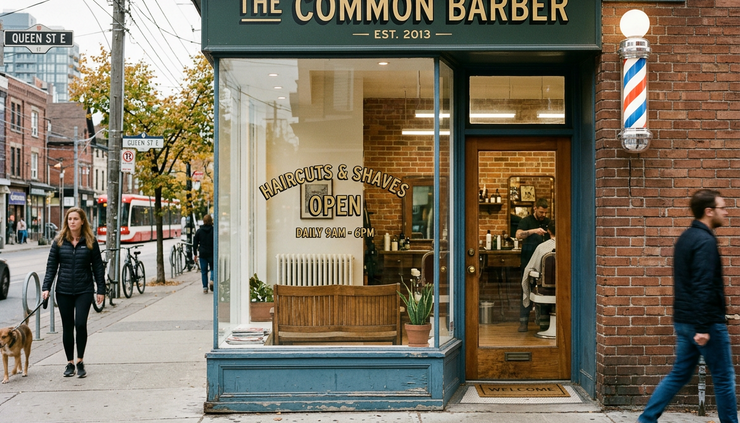
If you are unsure, visit the barbershop before you book. You do not need to make it awkward. Walk in, ask about services, check availability, and get a feel for the space.
A quick visit can tell you a lot.
Notice whether the shop looks clean. Hair on the floor during a busy day is normal, but tools, chairs, counters, and sinks should look cared for. Clippers, combs, razors, capes, and towels should be handled in a way that feels hygienic. If something feels off, trust that reaction.
The atmosphere matters too. Some shops are lively and social, with music and conversation. Others are quiet and relaxed. Neither is better. The better choice is the one where you feel comfortable.
Pay attention to how staff greet people. Do they acknowledge walk-ins? Do they explain wait times clearly? Do they seem rushed or annoyed? A friendly, respectful first impression is a good sign, especially if you are nervous about trying someone new.
Compare pricing without choosing only by price
Barber pricing in Toronto varies widely. Location, experience, service length, demand, and the type of cut all affect the price. A basic buzz cut will usually cost less than a detailed fade with beard work. A senior barber may charge more than a junior barber.
Price matters, especially if you plan to maintain your cut every few weeks. Still, the cheapest option is not always the best value. A cut that grows out well, suits your face, and saves you from needing a fix can be worth paying more for.
Before booking, check what the price includes. Some shops separate services, while others bundle them. For example, a haircut may not include a beard trim, hot towel, shampoo, or styling. If you are unsure, ask before the appointment so there are no surprises at checkout.
Useful questions include:
Is the listed price for all hair lengths?
Does the service include a wash or styling?
Is beard work booked separately?
Are there different prices for junior and senior barbers?
How long is the appointment?
What payment methods do you accept?
Is tipping customary at the shop?
In Canada, many clients tip for barber services when they are happy with the result. The amount is personal, and it often depends on the service, relationship, and budget. If you are planning your costs, leave room for tax and tip where applicable.
The right price is one that fits your budget and matches the quality, care, and experience you receive.
Book a small first appointment if you are nervous
You do not have to start with a major transformation. If you are trying a new barber, consider booking a simple cleanup, beard trim, or conservative version of your usual haircut first.
This gives you a chance to see how the barber works. Do they ask questions? Do they listen when you explain what you want? Do they check in before making big changes? Do they explain what is possible?
Bring reference photos if you have them. Try to bring more than one angle, especially for fades, longer cuts, or beard shapes. Photos help, but be open to feedback. Your hair may have a different density, texture, growth pattern, or length than the person in the image.
Be clear about your boundaries. If you do not want much length removed, say so plainly. If you dislike a high fade, mention it. If you are growing out the top, explain the goal. A good barber will appreciate clear direction.
You can say:
“I am trying to keep the top longer, clean up the sides, and avoid going too high with the fade.”
That gives the barber useful information without micromanaging every move.
Watch how the consultation feels
The consultation is one of the best ways to judge a barber. It does not need to be long, but it should feel thoughtful.
A good barber usually asks about:
What you want changed
What you want to keep
How you style your hair
How often you get it cut
Whether you use product
Any problem areas, such as cowlicks or uneven growth
How sharp or natural you want the finish
They may also repeat your request back to you. That helps confirm you are both picturing the same result.
If the barber seems impatient before the cut starts, be careful. If they dismiss your concerns, rush your explanation, or pressure you into a style you do not want, that is not a great sign. Skill matters, but communication matters just as much.
The best barber in Toronto for you is someone who combines technical ability with comfort, respect, and consistency.
Trust your instincts about comfort
Personal comfort is not a small thing. You are sitting close to someone who is cutting your hair, shaping your beard, or using sharp tools around your face and neck. You should feel at ease.
That does not mean the shop has to be quiet or fancy. It means you feel respected. You should feel comfortable asking questions, correcting a detail, or saying you prefer something different.
Trust your instincts if:
The shop feels unclean
The barber does not listen
You feel rushed
Prices are unclear
The atmosphere makes you uneasy
The barber ignores your reference or stated limits
You leave feeling uncomfortable, even if the cut looks fine
On the other hand, notice the green flags. A barber who remembers your preferences, explains styling tips, and gives you a cut that grows out well is worth keeping. Consistency is one of the clearest signs you have found the right fit.
Give the relationship time, but do not ignore problems
The first cut with a new barber is partly about learning. They are getting to know your hair, and you are getting to know their style. If the result is close but not perfect, you can often improve it on the next visit by giving clear feedback.
For example, you might say:
“Last time looked good, but I would like the sides a little lower around the temple.”
Or:
“I liked the length on top, but can we leave more weight at the crown this time?”
Good barbers welcome useful feedback. They want regular clients, and regular clients are built through trust.
At the same time, do not feel obligated to return if the experience was poor. If the barber ignored your instructions, made you uncomfortable, or delivered a cut far from what you discussed, it is fine to move on. Toronto has many options. Your time, money, and comfort matter.
Make your final choice with both facts and feel
Finding a good barber in Toronto comes down to a mix of research and instinct. Reviews, photos, qualifications, specialties, cleanliness, services, and pricing all help you make a smart choice. Personal comfort helps you make the right one.
Start close to your neighbourhood or routine. Read reviews carefully. Ask people with great hair where they go. Visit the shop if you can. Check that the barber has experience with your hair type and the service you want. Compare pricing clearly, then book a low-risk first appointment.
Most of all, pay attention to how you feel in the chair. A great barber listens, communicates, keeps a clean space, and helps you leave looking like yourself on a very good day.
When you find that person, stick with them. A trusted barber makes every future cut easier.
If you're searching for a barber in the east end, we'd love to be the shop you stop searching at. Crown & Clippers is the highest-rated barbershop in Scarborough, with over 1,400 five-star reviews from clients who found their barber with us and kept coming back. Come in for a first cut and see how it feels in the chair: https://getsquire.com/booking/book/crown-and-clippers-barbershop-scarborough


