

How to Fix a Patchy Beard and Grow Fuller Facial Hair

A patchy beard can feel personal. One cheek fills in, the other stays sparse. The chin looks strong, but the jawline refuses to connect. You wait a few weeks, check the mirror too often, and wonder if it is time to give up and shave.
Do not quit too early. Many “bad beards” are really young beards, uneven beards, or beards that need a smarter shape. While genetics play a big role, grooming, skin care, nutrition, sleep, and patience can all help facial hair look fuller and healthier.
This guide covers the common causes of patchiness, the best grooming techniques, products that can help, and lifestyle habits that support steady growth.

Why beards grow in patchy in the first place
Before trying to fix a patchy beard, it helps to know what might be causing it. Patchiness is common, and it does not always mean the beard will stay that way forever.
Genetics set the starting point
Hair follicles are partly controlled by genetics. Some people naturally grow dense cheek hair. Others grow stronger moustache and chin hair but lighter cheeks. If close relatives have similar beard patterns, genetics may be the main reason.
That does not mean nothing can improve. A good shape, better skin care, and more time can make a patchy beard look much fuller than expected.
Age can make a real difference
Facial hair often continues to develop into the mid to late 20s, and sometimes beyond. A beard that looks thin at 19 may look completely different at 27. If the follicles are active but slow, time may be the biggest missing ingredient.
One barber I know tells younger clients to take photos every few months instead of judging progress every morning. The difference is often clearer when you compare photos over time.
Hormones and follicle sensitivity matter
Testosterone and dihydrotestosterone, often called DHT, affect facial hair growth. The key factor is not only hormone level, but how sensitive the follicles are to those hormones.
If beard growth suddenly changes, or if patchiness comes with symptoms like fatigue, major weight change, or hair loss in round spots, it is sensible to speak with a doctor or dermatologist. This article is for general information and is not medical advice.
Skin health affects beard health
Dry skin, clogged pores, irritation, dandruff, and inflammation can all make facial hair look worse. A flaky, itchy beard area often leads to scratching, which can break hairs and make thin sections more obvious.
Healthy skin gives hair a better environment to grow.
Grooming mistakes can exaggerate uneven growth
Sometimes the beard is not as patchy as it looks. The problem may be uneven length, blunt trimming, a neckline that sits too high, or cheek lines that remove too much hair.
A beard with mixed lengths can look chaotic. A patchy beard with a clear shape can look intentional.
Give your beard enough time before judging it
The biggest mistake is trimming too soon. Many people shave after two or three weeks because the beard looks uneven, itchy, or awkward. That stage is normal.
Try a minimum 8-week growth period before making a final decision. If your beard grows slowly, stretch that to 10 or 12 weeks. During this time, avoid carving deep cheek lines or trimming the sparse areas too aggressively.
Take a photo once a week in the same lighting. Bathroom lighting can be harsh, especially under bright overhead bulbs. Natural light gives a more honest view.
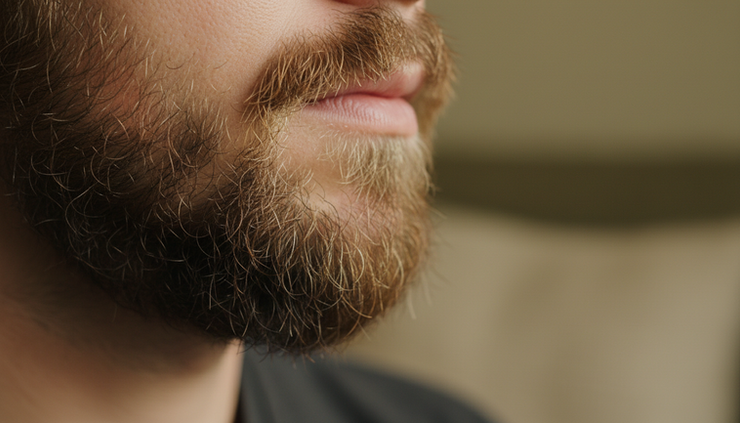
A patchy beard often looks worse from 10 cm away than it does at conversation distance.
That was true for a friend of mine who thought his cheeks were “empty.” After 10 weeks, the longer hairs from the upper jaw and sideburns blended into the lighter spots. It did not become a thick lumberjack beard, but it became a balanced short boxed beard that suited his face.
Use grooming techniques that make patchiness less obvious
A fuller-looking beard is often more about shape than density. The right trim can turn scattered growth into a clean style.
Choose a beard style that works with your growth pattern
Do not fight your strongest areas. Build the beard around them.
If your cheeks are thin but your moustache and chin are strong, try:
Goatee
Van Dyke
Anchor beard
Short boxed beard with lower cheek lines
If your jawline grows well but the chin is lighter, try:
Chin strap with stubble
Heavy stubble
Short beard with a natural neckline
If growth is scattered everywhere, try:
Designer stubble
3-day to 10-day stubble
Short cropped beard
A beard does not need full cheek coverage to look good. It needs balance.
Keep the cheeks natural at first
Many people cut the cheek line too low while trying to “clean it up.” This removes hairs that could help fill the upper beard.
Let the cheek line grow naturally for several weeks. After that, remove only the stray hairs that sit far above the main beard shape. A soft, natural cheek line often looks better on patchy growth than a sharp, low line.
Set a neckline that supports the beard
A neckline that is too high can make the jaw look bare and disconnected. As a simple guide, place two fingers above the Adam’s apple and create a gentle curve from ear to ear.
Do not shave right on the jawbone. Leaving some hair under the jaw adds depth and makes the beard look fuller from the front.
Trim longer hairs instead of trimming everything down
Patchy beards often have uneven growth speeds. Some hairs grow long and wiry while others lag behind. If you trim the whole beard down to match the shortest hairs, you may lose the coverage you need.
Use scissors or a trimmer with a longer guard to remove only the wild hairs. This keeps fullness while improving shape.
Brush and train the beard daily
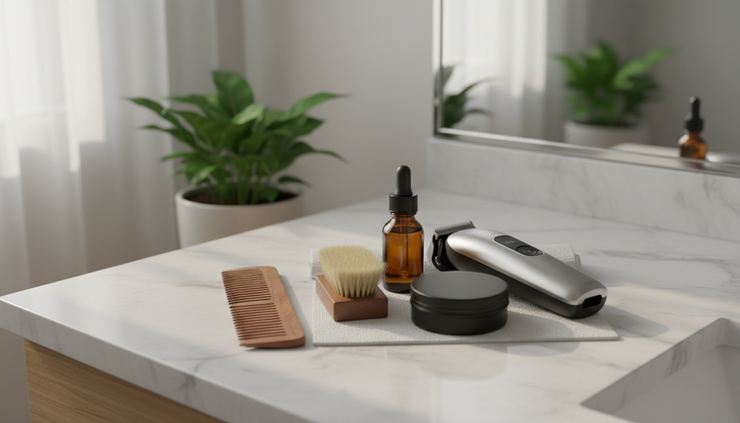
A boar bristle brush can help guide hairs over sparse spots. Brush downward on the cheeks and slightly forward along the jaw. This simple habit can make a noticeable difference once hairs are long enough to move.
A beard comb helps with longer styles, but a brush is often better for short to medium patchy beards because it distributes natural oils and lays hairs neatly.
Pick products that support healthier-looking growth
Products cannot change your genetics, but they can improve the condition of your skin and beard. Healthier hair usually looks thicker, softer, and more controlled.
Product | What it helps with | How to use it |
Gentle face cleanser | Removes sweat and oil without stripping skin | Wash once daily, or after heavy sweating |
Beard oil | Softens hair and reduces dryness | Apply a few drops to damp skin under the beard |
Beard balm | Adds light hold and shape | Warm a small amount in your hands, then smooth through the beard |
Boar bristle brush | Helps cover sparse areas and tame flyaways | Brush daily after applying oil or balm |
Moisturiser | Supports the skin barrier | Use on exposed skin and under shorter beards |
Exfoliant | Helps reduce flakes and buildup | Use gently 1 to 2 times per week |
Beard oil helps the skin first
Beard oil is not magic growth serum. Its main job is to moisturise the skin and soften the hair. That matters because dry, irritated skin can make growing a beard uncomfortable.
Look for simple oils such as jojoba, argan, grapeseed, or sweet almond. If fragrance bothers your skin, choose an unscented option.
Beard balm can make thin areas behave
Balm gives light hold. It helps longer hairs sit in place and can reduce the see-through look of sparse spots. Use a small amount. Too much balm can make a patchy beard look greasy or flat.
Be careful with growth treatments
Some people use topical minoxidil for beard growth. Research and medical use are stronger for scalp hair than beard growth, and it can cause side effects such as dryness, irritation, unwanted hair growth in other areas, or heart-related symptoms in rare cases.
If you are thinking about using it, talk to a pharmacist, doctor, or dermatologist first, especially if you take medication or have a health condition.
Build a simple beard care routine
A routine does not need to be complicated. Consistency matters more than owning every product.
Morning routine
Wash with water or a gentle cleanser if the skin feels oily. Pat dry, then apply moisturiser or beard oil while the skin is slightly damp. Brush the beard into shape.
If you use balm, apply it after oil. Start with less than you think you need.
Evening routine
Rinse the beard if you have been sweating, working outdoors, or wearing a face covering for long periods. Clean skin helps reduce buildup.
If the skin feels dry, add a light moisturiser before bed. Avoid heavy products that clog pores or leave residue on the pillow.
Weekly routine
Trim only the hairs that disrupt the shape. Keep the neckline tidy. Exfoliate gently once or twice a week if your skin tolerates it.
Do not scrub hard. Irritated skin can make beard growth more uncomfortable.
Support beard growth with better daily habits
Lifestyle will not override genetics, but it can help your body do its best work. Hair growth is a biological process, and it responds to overall health.
Eat enough protein and key nutrients
Hair is made mostly of keratin, a protein. If your diet is low in protein or nutrients, hair quality can suffer.
Helpful foods include:
Eggs, fish, chicken, tofu, lentils, and Greek yogurt for protein
Nuts, seeds, and olive oil for healthy fats
Leafy greens and beans for iron and folate
Whole grains and dairy or fortified foods for B vitamins
Fruits and vegetables for vitamin C and antioxidants
Avoid extreme diets if fuller facial hair is a goal. Your body may treat hair growth as a lower priority when energy intake is too low.
Sleep like it matters
Poor sleep can affect stress hormones, recovery, and general health. Aim for regular sleep and a steady schedule when possible.
A simple change like going to bed 30 minutes earlier can be more useful than buying another beard product.
Manage stress in realistic ways
Stress does not usually create patchiness overnight, but chronic stress can affect skin, sleep, habits, and overall wellbeing. Exercise, walks, breathing drills, hobbies, and time away from screens can all help.
A person I met through a grooming forum once shared that his beard improved after he fixed two boring things: sleep and dry skin. He had been chasing oils and tools, but the real change came from sleeping more consistently and using moisturiser every day for two months.
Exercise supports general health
Strength training, cardio, sports, and regular movement all support circulation, mood, and metabolic health. You do not need an extreme routine. A few workouts per week and daily walking can make a difference in how you feel, which helps you stick with the beard-growing phase.
Know when to get professional help
Most patchy beards are normal. Still, some signs deserve medical attention.
Speak with a healthcare professional if you notice:
Sudden round bald patches in the beard
Red, scaly, painful, or oozing skin
Severe itching that does not improve
Rapid hair loss on the scalp or body
Major fatigue, weight change, or other new symptoms
Conditions such as alopecia areata, fungal infections, eczema, psoriasis, and hormonal issues can affect beard growth. Treating the underlying problem may help the beard area recover.
A good barber can help too. Bring reference photos of styles that match your growth pattern. A skilled barber will not force a full beard shape onto cheeks that are not ready. They will work with what you have.

What fuller progress usually looks like
Beard progress is rarely even. One week, the moustache may look stronger. Another week, the jawline catches up. The cheeks are often the slowest part.
A realistic timeline may look like this:
Weeks 1 to 2 Stubble looks uneven, and itchiness may start.
Weeks 3 to 5 Patchiness is often most noticeable. Resist the urge to shave.
Weeks 6 to 8 Longer hairs begin covering lighter areas. Shape becomes easier.
Weeks 9 to 12 The beard looks more settled. This is a good time to choose a lasting style.
If the beard still has gaps after 12 weeks, that does not mean failure. It means you now know your natural pattern. From there, you can choose a style that works instead of waiting for a beard that may not match your genetics.
The encouraging truth about patchy beards
A patchy beard is not a grooming dead end. It is a starting point. Some areas may fill in with age. Some may look fuller with length. Some may need a different style. All of that is normal.
Start with patience. Grow it for 8 to 12 weeks, care for the skin underneath, brush it daily, trim with restraint, and choose a shape that suits your strongest growth. Add better sleep, enough protein, regular movement, and lower stress where you can.
The goal is not to copy someone else’s beard. The goal is to make your facial hair look healthy, intentional, and like it belongs on your face. That is when a patchy beard starts to look less like a problem and more like a style you know how to wear.
Patchy growth is a lot easier to live with once someone shapes it properly. Crown & Clippers is the highest-rated barbershop in Scarborough, with over 1,400 five-star reviews, and our barbers are used to building a clean beard line around uneven growth instead of fighting it. If you want a second opinion on the style that suits your pattern, you can book a chair here: https://getsquire.com/booking/book/crown-and-clippers-barbershop-scarborough


Comments